

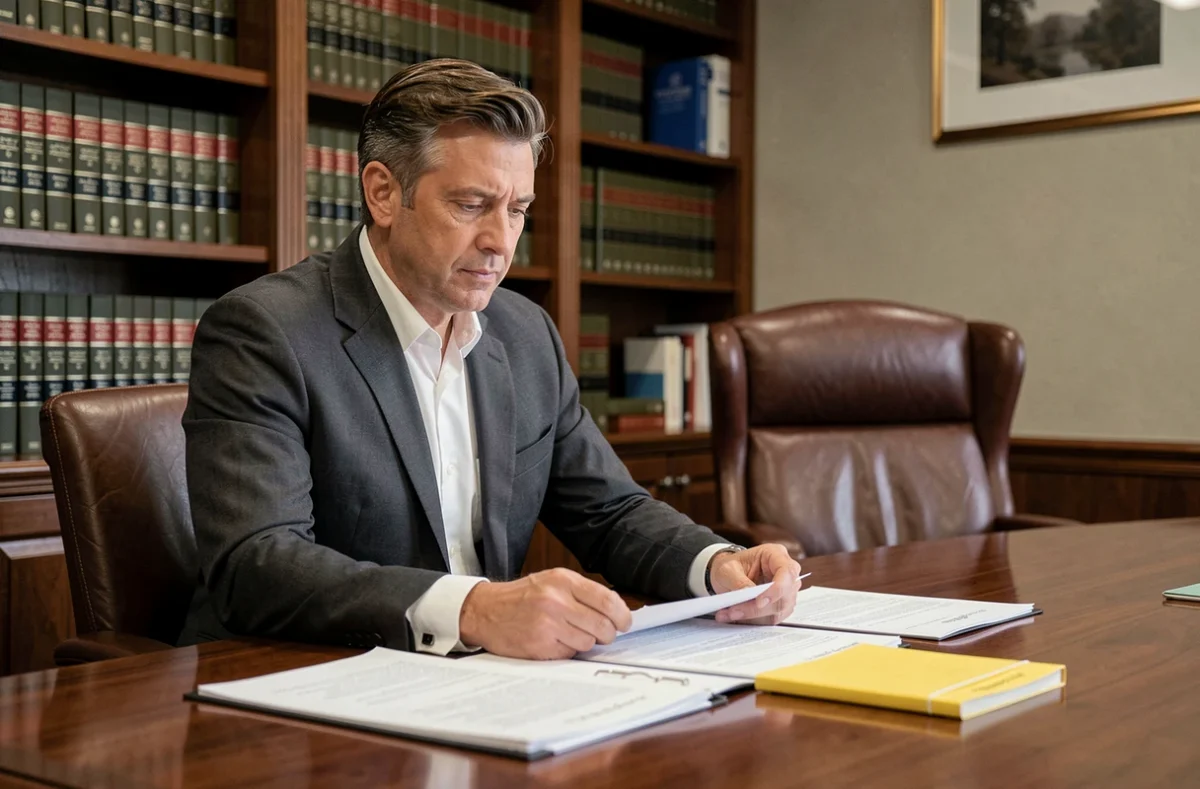
Criminal defense in the United States operates on a single structural premise: the prosecution carries the entire burden of proof. Every strategy a defense attorney deploys targets that burden, either by dismantling the evidence directly or by reframing the facts so that reasonable doubt becomes unavoidable. What separates an effective defense from a generic one is how precisely the strategy matches the charge, the jurisdiction, and the current enforcement climate.
Federal charging priorities and their impact on defense strategy
Most competitor guides treat criminal defense as a static catalog of legal doctrines. They rarely address the fact that federal charging priorities reshape which strategies matter most in a given year. A defense built around a drug possession charge looks fundamentally different when federal prosecutors are aggressively pursuing immigration-linked offenses alongside renewed drug enforcement.
Related reading: Immigration policies under review: Implications for American businesses in 2026
According to the NACDL’s “Criminal Case Tracker: First-Year Report,” covering January 2025 through January 2026, federal criminal enforcement has shifted markedly toward immigration-related prosecutions and drug cases. For defense attorneys, this means two things.
First, collateral consequences now drive strategy as much as the sentence itself. A noncitizen defendant facing a seemingly minor drug charge may need a defense shaped less around acquittal and more around avoiding a conviction category that triggers deportation. Plea negotiations in this environment require granular knowledge of immigration law, not just criminal statutes.
Recommended read: Intellectual property rights in the digital age: The impact on American businesses
Second, discovery and pretrial motions carry more weight when prosecutors are working under policy pressure to secure convictions in targeted categories. Challenging the adequacy of the investigation, rather than simply contesting guilt at trial, becomes a primary tactical lever.

Pretrial defense tactics: where most cases are actually won
The overwhelming majority of criminal cases in the U.S. never reach a jury. They resolve through plea bargains, dismissals, or pretrial rulings that gut the prosecution’s case before opening statements. Understanding pretrial mechanics matters more than memorizing affirmative defenses.
Suppression motions and constitutional challenges
A motion to suppress evidence targets how law enforcement obtained it. If police lacked probable cause for a search, coerced a confession, or conducted a stop without reasonable suspicion, the resulting evidence can be excluded. Suppression of a single piece of evidence can collapse an entire prosecution.
Constitutional violations extend beyond the Fourth Amendment. Delays in providing counsel, failures in Miranda warnings, and due process violations during lineups all create grounds for exclusion. Procedural defenses also include statute of limitations arguments, which bar prosecution once the legally defined window has closed.
Grand jury opacity as a defense issue
The NACDL report also describes unusual opacity surrounding “no true bill” outcomes, where grand juries decline to indict. Defense counsel may have limited visibility into how prosecutors screened or presented evidence to the grand jury. This makes targeted discovery requests for grand-jury-related information an emerging and underutilized pretrial tool.
| Pretrial tactic | What it targets | Typical outcome if successful |
|---|---|---|
| Motion to suppress (Fourth Amendment) | Illegally obtained physical evidence | Evidence excluded, charges may be reduced or dropped |
| Motion to suppress (Fifth Amendment) | Coerced or un-Mirandized statements | Confession excluded from trial |
| Statute of limitations challenge | Expired prosecution window | Case dismissed |
| Grand jury discovery request | Prosecutorial screening and presentation | Potential exposure of procedural errors |
| Brady motion (disclosure) | Withheld exculpatory evidence | New evidence may undermine prosecution’s case |
Video evidence and the modern defense workflow
Bystander footage, body camera recordings, and surveillance video have fundamentally altered criminal defense practice. NACDL case analyses describe prosecutions in which bystander video directly contradicted law enforcement accounts, leading to dismissals or exposing alleged false statements by officers.
A modern defense workflow treats video evidence as a first-priority asset. The steps involved are specific and time-sensitive:
- Identify all potential footage sources within hours of arrest, including nearby businesses, traffic cameras, doorbell cameras, and bystanders’ phones, because many systems overwrite recordings on short cycles
- Issue preservation letters or subpoenas immediately to prevent automatic deletion of surveillance footage
- Authenticate and timestamp all video to establish chain of custody before it can be challenged at trial
- Cross-reference video against police reports and officer testimony to isolate discrepancies in the prosecution’s narrative
This is not theoretical. In multiple federal cases tracked by NACDL, newly discovered video evidence led directly to case dismissals. Rapid evidence preservation is now a core defense competency, not an optional step.
Affirmative defenses: when the facts are admitted but reframed
Unlike evidence challenges, affirmative defenses accept that the defendant performed the act but argue it was legally justified or excused. These carry a higher burden because the defense typically needs to introduce supporting evidence rather than simply poking holes in the prosecution’s case.
- Self-defense requires showing the defendant reasonably believed force was necessary to prevent imminent harm, with the specific legal standard varying by state (some require a duty to retreat, others follow “stand your ground” statutes)
- Duress applies when the defendant committed the act under a credible threat of serious harm, though it is generally unavailable as a defense to homicide
- Entrapment argues that law enforcement induced the defendant to commit a crime they would not otherwise have committed, focusing on government conduct rather than the defendant’s predisposition
- Insanity defenses, while rare and difficult to prove, assert the defendant lacked the mental capacity to understand the nature or wrongfulness of the act at the time it occurred
Each of these requires a distinct evidentiary foundation. An entrapment defense built on showing police overreach operates in a completely different register than an insanity defense requiring expert psychiatric testimony. Choosing the wrong affirmative defense can be worse than offering none at all, because it may concede facts the prosecution had not yet proven.

Plea negotiations and strategic positioning
Plea bargaining resolves the vast majority of criminal cases. The prosecution offers a reduced charge or lighter sentence in exchange for a guilty plea, avoiding the cost and uncertainty of trial. Defense strategy in plea negotiations is not about capitulation. It is about leverage.
Strong pretrial work, a viable suppression motion, or credible video evidence that contradicts the prosecution’s version all increase bargaining power. A prosecutor facing a realistic chance of losing at trial has far more incentive to offer favorable terms.
For defendants facing charges in categories subject to heightened federal enforcement, plea strategy also involves evaluating collateral consequences. A plea to the wrong charge category can trigger consequences beyond the courtroom, including professional license revocations, immigration consequences, or loss of civil rights. Defense counsel who negotiate pleas without mapping these downstream effects leave clients exposed.
The defense strategies that produce the best outcomes share a common trait: they start early, focus on evidence integrity, and treat the pretrial phase as the primary battlefield rather than an administrative prelude to trial.