

Measuring the state of American electric vehicles in late 2026 requires looking beyond headline sales figures. The U.S. EV market is no longer a single story about battery-electric growth. It is a layered picture shaped by hybrid momentum, regional disparities, a maturing used-EV segment, and automakers recalibrating their lineups. The data points below frame what is actually happening on the ground.
EV and hybrid market share compared across Q2 2026
| Metric | Battery-Electric Vehicles | Hybrids (HEV + PHEV) |
|---|---|---|
| Market trajectory (2025-2026) | Share dipped below 2025 level in Q2 | Clearest growth segment in 2026 |
| Consumer incentive landscape | Federal tax credit removed | State-level credits vary widely |
| Model availability trend | Legacy automakers pulling back some BEV launches | Expanding across sedans, SUVs, trucks |
| Price sensitivity factor | Higher average transaction price | Lower entry cost, no range anxiety |
U.S. EV share reached 7.9% in Q2 2026, a meaningful improvement from earlier quarters but still below the level recorded in 2025. Hybrid sales, by contrast, became the clearest growth area through the first half of the year.
Read also: Climate change and corporate America: The race towards sustainable practices
This split tells us something concrete. Buyers who might have committed to a full battery-electric vehicle are choosing hybrids as a middle step, particularly after the removal of the federal EV tax credit reshaped purchase math for many households.
You may also like: Streaming wars: The future of entertainment in the US
Regional EV adoption gaps across U.S. states
National averages obscure dramatic state-level differences. In Q2 2026, California led EV registrations at 21.2%, followed by Washington at 17.5% and Nevada at 15.4%. Most Southern and Midwestern states remain far below the national average.
Several factors drive these gaps:
- Charging infrastructure density is far higher along the West Coast and in the Northeast corridor, making daily EV ownership practical in those regions.
- Local and state-level incentives (rebates, HOV lane access, reduced registration fees) stack on top of vehicle pricing in ways that vary enormously by zip code.
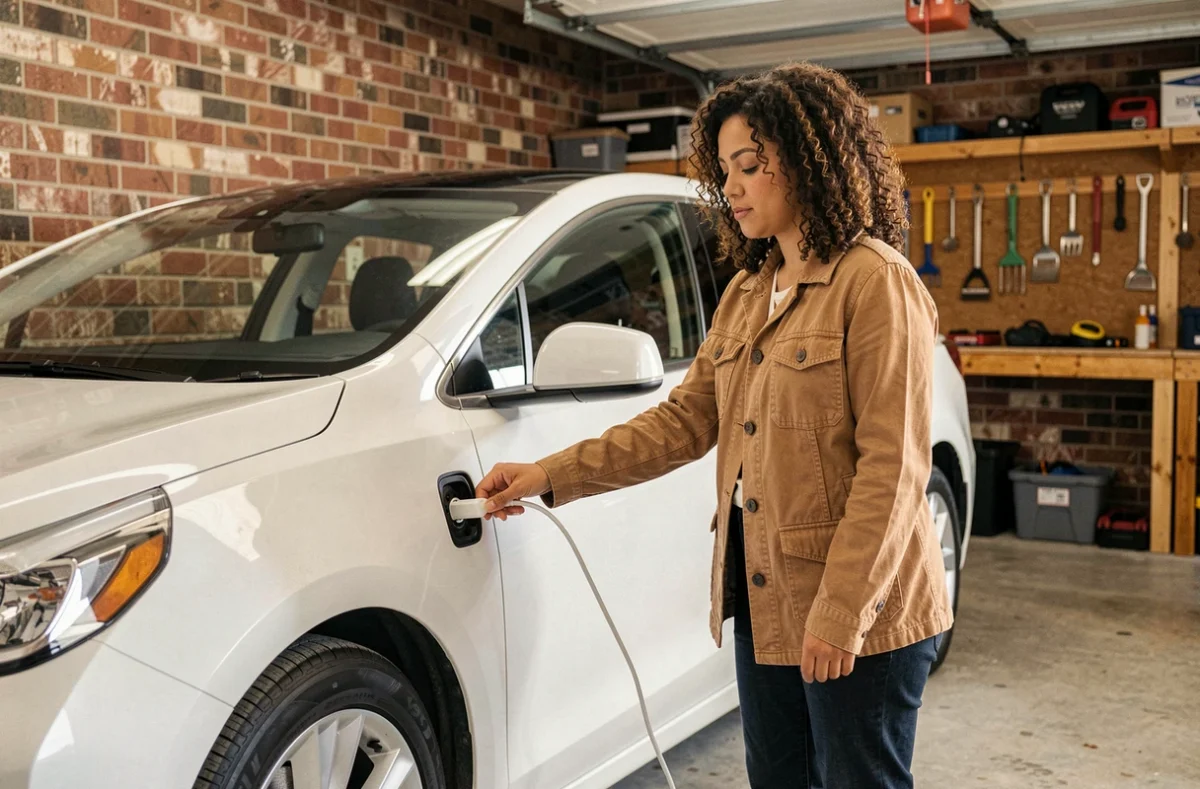
- Housing patterns matter. Homeowners with garages can install Level 2 chargers easily; apartment residents in states with limited public charging face a different equation entirely.
Geographic unevenness is not a temporary phase. It reflects structural differences in housing, utility rates, and political priorities that will take years to converge, if they converge at all.
Used EV sales as an overlooked adoption channel
Most coverage of the EV transition focuses on new-vehicle sales. The used-EV market deserves equal attention. In August 2026, used EV sales rose 40.7% year over year and 25.9% from the previous month.
Growing off-lease returns from the 2022-2023 leasing wave are flooding the secondary market with vehicles that still carry substantial battery life. For price-sensitive buyers who were priced out of new EVs (especially without the federal tax credit), a two- or three-year-old model at a significantly lower price point removes the biggest barrier.
This channel could ultimately move more Americans into electric vehicles than any single policy incentive. A household earning a median income is far more likely to buy a $22,000 used EV than a $45,000 new one, regardless of tax credits.
Charging infrastructure beyond station count
The number of public charging stations is a commonly cited metric, but it misses the point. With approximately 7.8 million EVs now on U.S. roads, the real competitive criteria have shifted.
- Station uptime and reliability matter more than raw numbers. A broken charger is worse than no charger because it erodes driver trust.
- Connector compatibility (CCS vs. NACS) is consolidating around Tesla’s NACS standard, but older CCS-equipped vehicles still need adapter solutions.
- Highway corridor coverage determines whether EVs work for road trips, not just commutes. Gaps on rural interstates remain a practical barrier.
- Access for apartment residents and commercial fleets requires solutions that differ fundamentally from single-family home charging.
Measuring progress by counting new station announcements is misleading. Reliability and coverage quality define the actual charging experience for the drivers who depend on public networks daily.
Tesla dominance and the diversifying competitive landscape
Tesla still accounted for more than half of U.S. EV sales through mid-2026, but the competitive picture is shifting. Legacy automakers like Ford, GM, and Hyundai-Kia have expanded their EV portfolios, and newer entrants (Rivian, VinFast) are carving out niches.
The diversification is real but uneven. Some legacy brands have scaled back planned BEV launches, pivoting toward hybrids or extended-range vehicles instead. Others are doubling down on electric trucks and SUVs where margins are higher.
For consumers, this means more choices but also more confusion. Warranty terms, software update policies, and charging network access vary by brand in ways that did not exist when buying a gasoline car. Brand loyalty in EVs is still forming, and the automaker that builds the most reliable charging partnership may win more customers than the one with the longest range spec sheet.

The U.S. EV market in late 2026 is not collapsing and not booming. It is sorting itself into distinct segments: new BEVs for early adopters and high-income buyers, hybrids for the cautious middle, and used EVs for budget-conscious households.
Regional infrastructure gaps and the absence of federal purchase incentives are the two structural forces shaping the pace. The automakers that read these segments accurately, rather than chasing a single narrative of universal electrification, are the ones positioning themselves for the next five years.