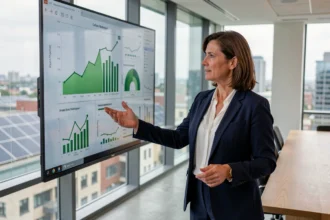


Walk into any large grocery store today and you will notice something different from a decade ago. Products labeled “carbon neutral” sit next to conventional ones. Packaging made from plant-based plastics lines the shelves. These are not niche offerings anymore. Green business practices have moved from the margins of US commerce into its operating core, reshaping how companies source materials, report emissions, and compete for customers.
California’s climate disclosure law and its ripple effect on US businesses
The biggest catalyst for green business adoption in the US right now is not a federal mandate. It is a state law with national reach.
You may also like: Leveraging technology: Improved productivity in US business operations
California’s SB 253 requires US-based public and private companies with more than $1 billion in annual revenue doing business in the state to report greenhouse gas emissions. Scope 1 and Scope 2 reports are due by November 10, 2026, with Scope 3 reporting expected to begin in 2027.
Why does a single state law matter nationally? Because California’s economy is so large that most major US corporations operate there. Rather than maintain separate reporting processes for one state, many companies are building emissions tracking systems across their entire US operations. A law written in Sacramento ends up changing how a company headquartered in Texas or Ohio measures its carbon footprint.
Related reading: Essential services every US business should outsource in 2026
At the federal level, the picture is less clear. The SEC’s 2024 climate-disclosure rules were stayed, and as of 2026 the agency has proposed rescinding them. The result is regulatory fragmentation, not a single national standard. Companies now track state-level obligations while federal requirements remain unsettled. This patchwork creates compliance pressure that pushes businesses toward greener operations whether they planned to or not.
CARB (the California Air Resources Board) has softened initial enforcement. Companies that were not already collecting emissions data by December 2024 are not expected to submit full data in the first cycle. CARB also opened a voluntary reporting portal, giving businesses a runway to build internal capacity before penalties apply.
Green supply chains: where sustainability meets cost control
Have you noticed that “sustainable sourcing” appears on more corporate websites than ever? That phrase reflects a genuine operational shift, not just marketing language.
Companies across manufacturing, retail, and food production are redesigning supply chains to reduce waste and emissions simultaneously. The motivation is partly environmental, but cost savings drive adoption. When a manufacturer reduces packaging weight or switches to recycled inputs, shipping costs drop. When a retailer consolidates distribution routes using emissions data, fuel bills shrink.
This dual benefit explains why green supply chain practices spread faster than voluntary environmental pledges alone. The practical gains reinforce the environmental ones. Several concrete steps illustrate how this works:
- Switching to circular material flows, where waste from one production stage becomes input for another, cutting both disposal costs and raw material purchases.
- Using emissions tracking software (now required for SB 253 compliance) to identify the highest-carbon segments of a supply chain and target them first.
- Negotiating with suppliers based on verified sustainability metrics rather than price alone, which reduces long-term risk from regulatory changes or resource scarcity.
Companies that map their full supply chain emissions gain a competitive edge because they can anticipate costs that less transparent competitors cannot see coming.
Renewable energy adoption across US industries
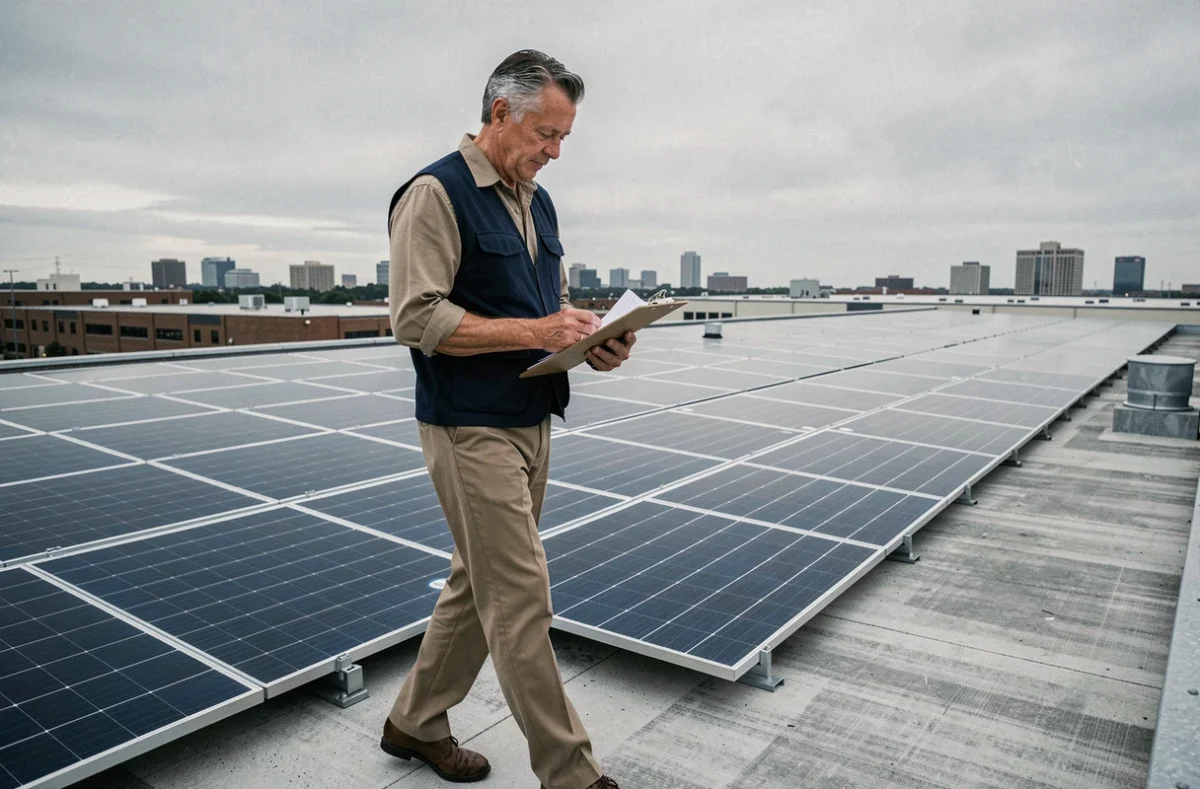
Solar panels on a warehouse roof used to signal an environmentally conscious brand. Today they signal something more straightforward: lower operating costs over time.
US businesses across sectors, from data centers to agriculture, are investing in on-site renewable energy and long-term power purchase agreements. The economics have shifted. The upfront cost of solar and wind installations has fallen significantly over the past decade, making renewables competitive with fossil-fuel electricity in most US markets.
Renewable energy is now an operational decision, not just an environmental one. A logistics company that locks in a fixed-rate solar contract protects itself from volatile utility prices. A food processor that installs biogas capture on its waste stream turns a disposal cost into an energy source.
The transition is uneven. Energy-intensive industries like steel, cement, and chemicals face harder tradeoffs because their processes require heat levels that current renewable technology handles less efficiently. For these sectors, the path involves intermediate steps: hybrid systems, green hydrogen pilot programs, and efficiency upgrades that reduce total energy demand before switching the source.
What smaller businesses can learn from large-scale adoption
Small and mid-sized businesses often assume renewable energy is only viable at corporate scale. That is less true than it was five years ago. Community solar programs, equipment leasing models, and state-level incentive programs lower the barrier. A restaurant that joins a community solar project or a small manufacturer that leases rooftop panels can access the same cost benefits that large corporations negotiate directly.

Consumer and investor pressure shaping corporate sustainability
Regulation and cost savings explain part of the green business trend. The other part comes from outside the company: customers and investors.
Consumer surveys consistently show that a majority of US shoppers consider environmental impact when choosing between similar products. This does not mean every purchasing decision is driven by sustainability, but it does mean that companies with visible green practices attract and retain customers more easily than those perceived as indifferent.
On the investor side, ESG (Environmental, Social, and Governance) metrics have become standard evaluation criteria. Fund managers use them to assess long-term risk. A company with no emissions data or no waste reduction plan looks riskier than a competitor with both, regardless of current profitability.
The combination of consumer preference and investor scrutiny creates a feedback loop:
- Companies adopt greener practices partly to attract capital and customers.
- As more companies report sustainability data, the ones that do not stand out negatively.
- Rising transparency standards (like SB 253) make it harder to claim green credentials without evidence, reducing greenwashing over time.
Transparency is replacing marketing as the primary trust signal in corporate sustainability. Companies that publish verified emissions data or third-party audited supply chain reports build credibility that branded campaigns alone cannot match.
What the green business shift looks like going forward
The trajectory is clear even if the pace varies by industry. Regulatory pressure from states like California is creating de facto national standards. Cost advantages from renewable energy and waste reduction reinforce voluntary adoption. Consumer and investor expectations keep rising.
The companies positioned best are not the ones making the loudest sustainability claims. They are the ones building internal systems to measure, report, and reduce emissions across operations and supply chains. Measurement infrastructure is the foundation of every credible green strategy. Without it, environmental commitments remain aspirational. With it, they become operational, auditable, and bankable.
For businesses still on the sidelines, the window for gradual preparation is narrowing. SB 253’s first reporting deadline arrives in weeks, not years. The companies that started early will spend less and stress less. Those that delayed face compressed timelines, higher consulting costs, and the risk of incomplete first filings.