


Corporate climate action in the United States refers to voluntary and mandatory steps that publicly traded and private companies take to measure, disclose, and reduce their greenhouse gas emissions. The landscape shifted significantly between 2023 and 2026, as federal disclosure rules stalled, state-level mandates expanded, and a measurable number of companies quietly scaled back their climate targets.
Shrinking ambition: why corporate climate targets keep changing
A pattern has emerged that complicates the narrative of steady corporate progress on climate. According to Harvard’s Corporate Climate Targets Database, 83% of U.S. companies with an emissions-reduction target changed it before its deadline. Of those revisions, 42% reduced the level of ambition rather than increasing it.
Related reading: Breaking the glass ceiling: Women CEOs making a difference in corporate America
The total number of companies maintaining a target dropped from 1,135 in 2023 to 1,056 in 2024. That decline may look modest in absolute terms, but it signals a directional shift. Companies are not simply adjusting timelines; some are walking away from public commitments altogether.
This trend has a name in sustainability circles: green hushing. Rather than face scrutiny for missing targets or risk litigation tied to overstated claims, some firms prefer silence. They continue internal efficiency programs but stop publishing goals or progress reports. The result is a widening gap between what companies actually do on emissions and what the public can verify.
Related reading: Electric vehicles revolution: American automakers driving towards a green future
California’s SB 253 and SB 261: the disclosure rules that matter now
While the federal government stepped back from mandatory climate disclosure, California filled the gap with two laws that carry outsized influence.
- SB 253 requires qualifying companies doing business in California to report Scope 1 and Scope 2 emissions annually. Scope 3 reporting, covering supply chain and product-use emissions, is scheduled to follow.
- SB 261 requires large companies to publish climate-related financial-risk reports every two years, pushing boards to quantify how physical and transition risks affect their balance sheets.
- Because California’s economy ranks among the largest in the world, these laws reach far beyond state borders. A company headquartered in Texas or Georgia but generating revenue in California falls under these requirements.
The SEC’s own climate-disclosure rule, adopted in March 2024, was stayed almost immediately, never enforced, and the agency later stopped defending it in court. This federal vacuum means that state-level mandates now define the U.S. corporate disclosure landscape. Companies face a fragmented patchwork rather than a single national standard, which raises compliance costs and creates uneven transparency across industries.
Renewable energy procurement and the concentration problem
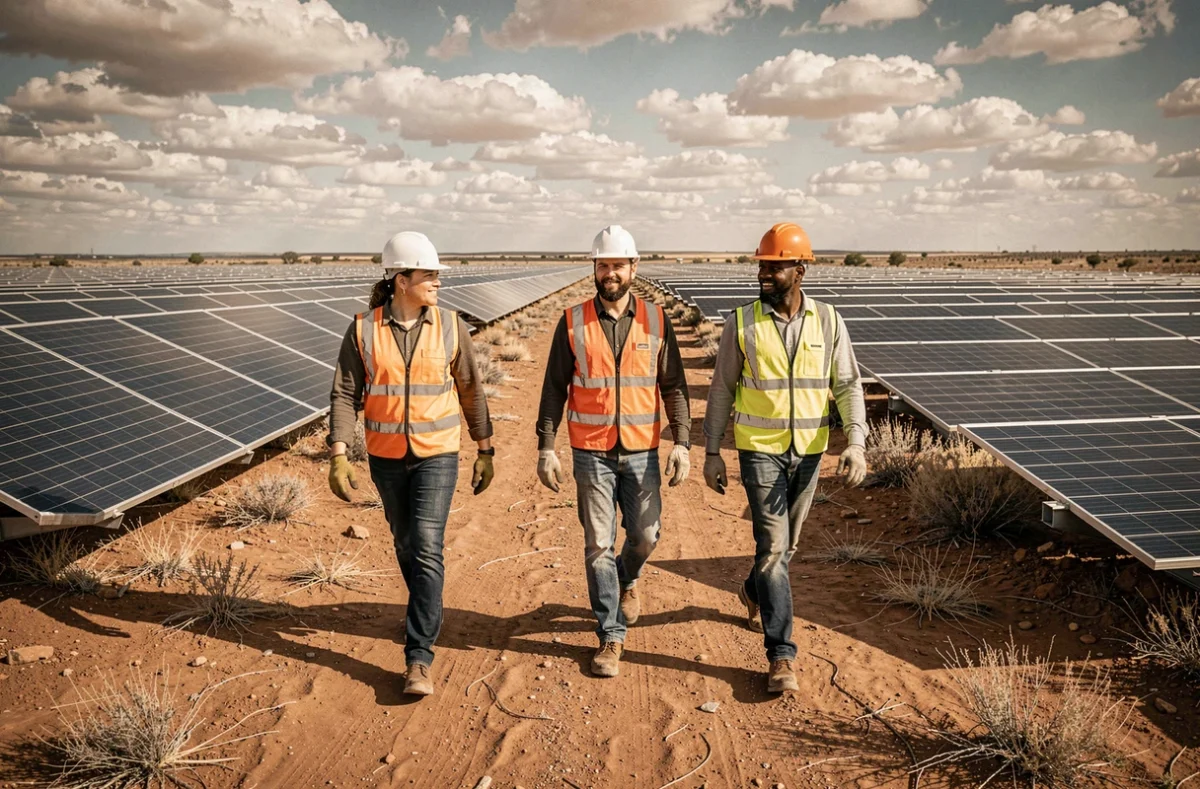
Corporate procurement of renewable energy, primarily through power purchase agreements, remains one of the most tangible forms of climate action. Large technology firms continue to sign major solar and wind deals to power data centers and cloud infrastructure.
The scale of individual transactions has grown, reflecting the enormous electricity demand driven by artificial intelligence workloads. Technology companies have been locking in multi-year contracts for wind and solar capacity to keep pace with expanding operations.
The less visible trend is concentration. The number of distinct U.S. corporate buyers has fallen even as total contracted capacity has expanded. A shrinking pool of very large buyers, mostly in technology and finance, accounts for an increasing share of new renewable deals. Smaller and mid-sized companies face higher transaction costs, less negotiating leverage, and limited access to the most competitive projects.
This concentration creates a structural vulnerability. If a handful of companies pause or slow their procurement, the pipeline of new renewable capacity could contract sharply. It also means that corporate renewable energy statistics can overstate how broadly the private sector is participating in the energy transition.

Corporate climate strategy beyond net-zero pledges
Net-zero pledges dominated corporate sustainability announcements between 2020 and 2023. Many of those commitments targeted 2050 or 2040, dates far enough away that they required little immediate operational change. The current environment demands more specificity.
Companies with credible climate strategies tend to share several characteristics:
- They set interim targets, typically for 2030 or earlier, with defined metrics for Scope 1 and Scope 2 emissions rather than relying solely on long-term pledges.
- They invest in internal carbon pricing, assigning a dollar cost to each ton of emissions in capital allocation decisions, which changes how projects get funded internally.
- They separate purchased offsets from actual emissions reductions in their reporting, avoiding the accounting ambiguity that has drawn regulatory and investor criticism.
- They engage directly in policy advocacy for climate legislation, recognizing that voluntary corporate action alone cannot drive system-wide decarbonization.
The gap between leaders and laggards is widening. U.S. oil majors have publicly cast doubt on the feasibility of net-zero by 2050. Technology and consumer goods companies, facing direct pressure from customers and employees, tend to maintain more aggressive timelines.
What the fragmented U.S. climate landscape means for business
The absence of a uniform federal disclosure framework does not mean corporate climate action is optional. It means the rules vary by state, by industry, and by the jurisdictions where a company operates or sells products. European regulations like the Corporate Sustainability Reporting Directive add another layer for U.S. firms with transatlantic operations.
For corporate leaders, the practical takeaway is straightforward. Companies that build robust emissions tracking now face lower compliance risk regardless of which regulatory regime ultimately prevails. Those that wait for clarity may find themselves scrambling to meet overlapping state and international requirements simultaneously.
The race toward sustainable practices in corporate America is real, but it is uneven, increasingly concentrated among large firms, and shaped more by regulatory pressure than by voluntary ambition. The companies that treat climate disclosure as an operational discipline rather than a marketing exercise are the ones best positioned for what comes next.