


State bars, courts, and federal agencies in the United States are each writing their own playbook for how lawyers should use digital tools, particularly generative AI. The result is not a single regulatory shift but a fragmented compliance landscape that forces practitioners to track obligations jurisdiction by jurisdiction. Understanding where the friction points sit, from billing ethics to citation accuracy rules, matters more than any broad narrative about technology “transforming” the profession.
State-by-state AI rules for lawyers: a compliance patchwork
There is no unified federal standard governing how attorneys may use AI in legal practice. Instead, individual state bars and courts have been issuing their own guidance, creating a patchwork of requirements around client consent, disclosure, confidentiality safeguards, supervision, and billing.
See also: Property management services: the future of real estate in the United States
Florida, Connecticut, Indiana, and New York have each developed rules that address citation accuracy and a lawyer’s independent verification of authorities, even when the rule text does not expressly mention AI. The common thread is that the lawyer’s signature carries full responsibility for every cited authority, regardless of the tool that produced it.
California has imposed its own set of new AI-related obligations on attorneys, adding another layer of state-specific compliance. For solo practitioners and small firms operating across state lines, this means a single AI workflow might satisfy one jurisdiction’s requirements while violating another’s.
Recommended read: Reliability and efficiency: top courier services in the United States
The practical consequence is significant: a firm licensed in three states may need three distinct disclosure protocols, three different client-consent procedures, and three versions of internal AI-use policies. Standardization efforts exist at the level of bar association recommendations, but adoption remains voluntary and uneven.

AI billing ethics: what the ABA’s Formal Opinion 512 actually constrains
One of the more concrete regulatory developments came from the American Bar Association. ABA Formal Opinion 512 (2024) clarifies that efficiency gains from AI cannot be billed as fictitious hourly time. If a task that previously took four hours now takes forty minutes with AI assistance, the attorney may not invoice the client for four hours of work.
This sounds straightforward, but the downstream questions are not. Lawyers may still charge for the time spent reviewing, verifying, and editing AI-generated output, as well as for the professional judgment applied to the result. Subsequent state-level commentary, including guidance from the State Bar of Wisconsin, has explored where the ethical line sits between legitimate tool-related charges and inflated billing.
The tension is real. Law firms invest in AI tools expecting a return, but the ethical framework prevents them from simply pocketing the time savings as billable hours. Firms that adopted flat-fee or value-based billing models before the AI wave may find themselves better positioned than those still reliant on hourly billing.
- Attorneys can bill for actual review time spent verifying AI-generated work product, but not for the hours the task would have taken manually.
- Tool subscription costs and related overhead may be passed to clients only if disclosed and agreed upon in advance, depending on the jurisdiction.
- No jurisdiction permits billing for time that was never spent, even if the AI output required significant prompt engineering to produce.
From AI disclosure rules to citation accuracy enforcement
Early court responses to AI in legal practice focused on disclosure, requiring lawyers to state whether AI had been used in preparing filings. That approach is shifting. Recent developments in multiple states now emphasize outcome-based accountability rather than process-based transparency.
The pivot is toward citation accuracy. Courts have sanctioned attorneys who submitted filings containing fabricated case citations generated by AI tools. These sanctions did not hinge on whether the lawyer disclosed AI use. They hinged on whether the lawyer verified the citations before signing the document.
This shift carries a practical implication for how firms structure their review workflows. A junior associate who uses AI to draft a brief still needs a verification step, ideally a manual check against primary sources, before that brief reaches a supervising attorney’s desk. AI-assisted drafting without independent citation verification now carries measurable disciplinary risk.
Some firms have responded by building internal checklists that require attorneys to confirm, before filing, that every cited case exists and supports the proposition for which it is cited. The available data does not yet show whether these checklists reduce error rates in practice, but the trend toward formalizing verification is clear.
Access to justice and the two-tiered system risk
AI tools have been described as a potential equalizer, enabling legal aid organizations and pro bono programs to serve more clients with fewer resources. The Legal Services Corporation, the largest funder of civil legal aid in the United States, has invested in gateway technology to expand reach.
The risk, however, is a two-tiered system. Well-funded firms can afford sophisticated, fine-tuned AI platforms with robust data-security infrastructure. Smaller legal aid providers and solo practitioners may rely on consumer-grade tools that lack the same safeguards. The gap between AI-equipped corporate firms and under-resourced legal aid providers could widen rather than narrow.
Regulatory scholars have argued that jurisdictions should embrace certain emerging reforms, such as expanded licensing models and opportunities for collaboration between technologists and legal professionals, to prevent this disparity from hardening into a permanent feature of the system. Whether those reforms gain traction remains an open question. Some state bars have begun exploring alternative licensing structures, but broad adoption is nowhere near certain.
Supervision obligations when AI handles legal work
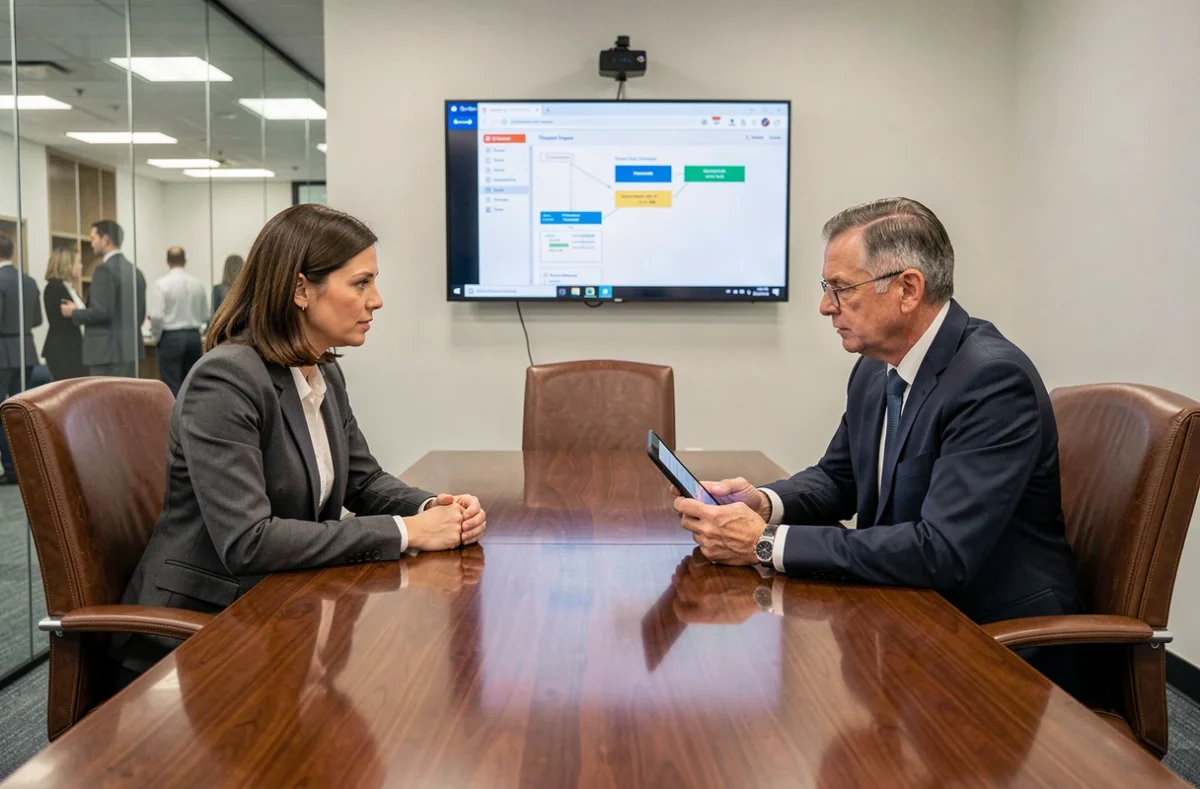
The ABA Model Rules of Professional Conduct, particularly Rules 1.1 (Competence) and 5.1 (Supervision), apply to AI use even though they predate modern generative tools. A supervising attorney’s duty to ensure competent representation does not diminish because a task was delegated to software rather than a paralegal.
What “supervision” means in the AI context is still being defined. At minimum, it requires that the attorney understands the tool’s capabilities and limitations well enough to evaluate its output critically. Confidentiality obligations under Rule 1.6 add another layer: inputting client data into an AI system that stores or transmits information to third parties may constitute an unauthorized disclosure.
- Competence now implicitly includes a baseline understanding of how AI tools process and generate legal text.
- Supervision extends to verifying that AI-generated documents do not introduce inaccurate legal standards or fabricated authorities.
- Confidentiality requires attorneys to assess whether their AI tools share data with external servers or model-training pipelines.
- Firms that treat AI outputs as a “first draft” rather than a finished product reduce, but do not eliminate, ethical exposure.
The regulatory picture for digital legal practice in the United States is not converging toward a single standard. It is fragmenting. Lawyers who treat compliance as a one-time policy update rather than an ongoing, jurisdiction-specific obligation are likely to find themselves on the wrong side of a rapidly evolving enforcement landscape.